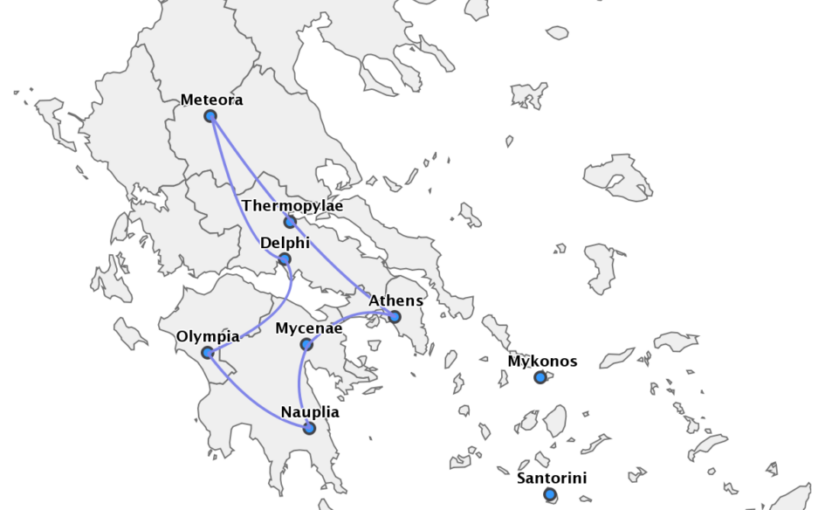
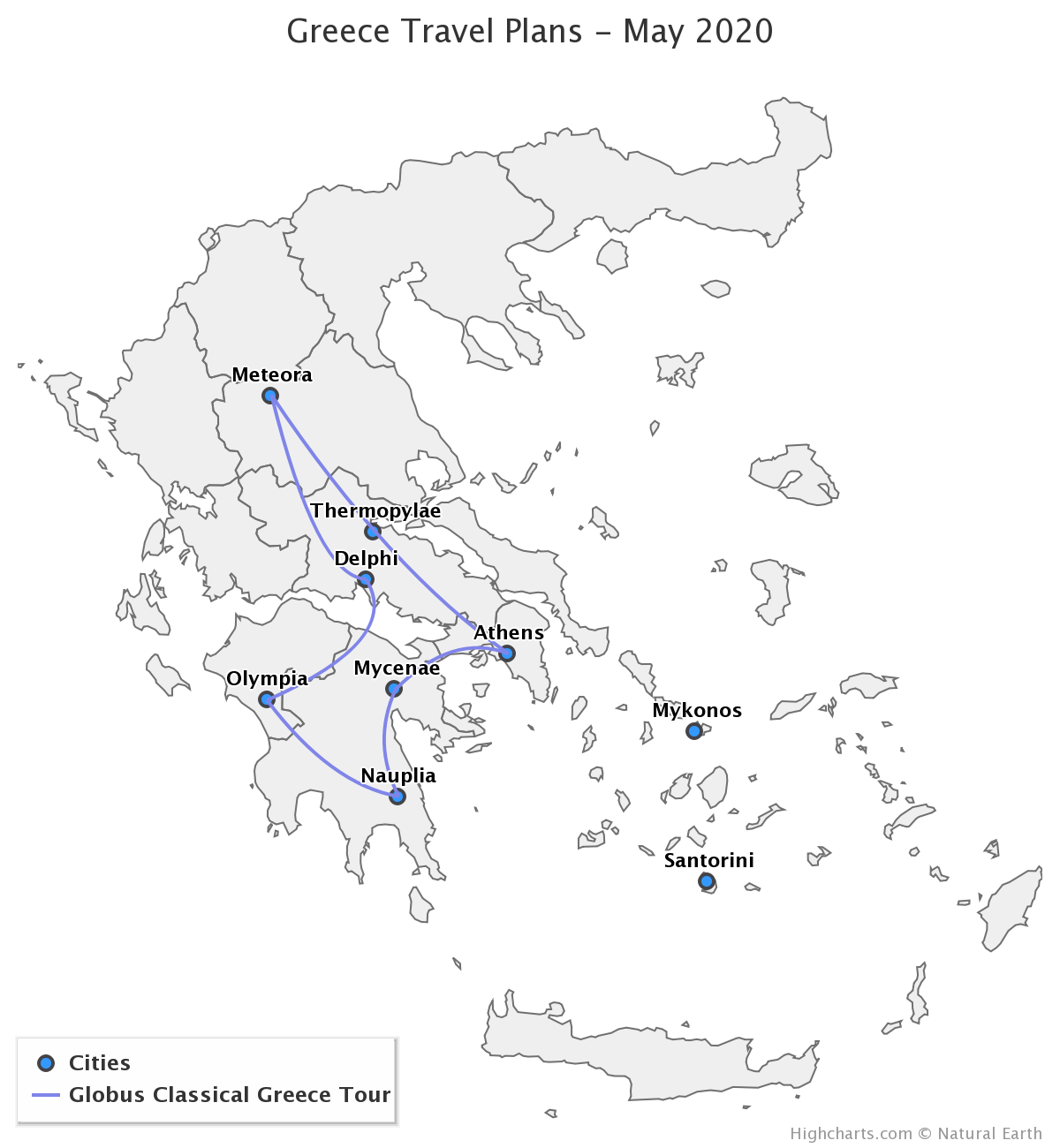
 This spring we’re heading back to Europe, but this time we’re heading to a place we’ve not visited before – Greece.
We’re going to do our exploring as part of a group tour with Globus. Even better, several of my siblings are going to be joining us. So, let me give you a high level view of our adventure.
[Okay… this is obviously a work in progress…]
Athens
Sightseeing – we’re planning on the Acropolis, the Parthenon, the Erechtheum and the Temple of Athena Nike. My high school english teachers would be impressed that I remember that Socrates held school, or court in Athens (Theseum)… maybe it would be my history teacher…? The first of the modern Olympic Games was held in Athens (not Olympia), and we hope to see that stadium from the 19th century.
Mycenae
One of the major centers of Greek civilization, Mycenae was a military stronghold that dominated much of southern Greece. The period of Greek history from ~1600 BC to ~1100 BC is called Mycenaean in reference to Mycenae. Peaking in 1350 BC, the citadel and lower town had a population of 30,000.
Nearby Corinth derives its name from the ancient city-state of Corinth. Homer’s writings describe this area.
Olympia
An archaeological site on the Peloponnese peninsula, Olympia was a major Panhellenic religious sanctuary of ancient Greece, where the ancient Olympic Games were held. The site was primarily dedicated to Zeus. Having done some research, I’ve found that it’s nowhere near Mount Olympus (Northern Greece), where the Twelve Olympians were believed to live. On the other hand, the Olympic Games were held here every four years from the 8th century BC to the 4th century AD. In addition to the Olympics area, we’re hoping to visit the temples of Hera and Zeus. (Even though we all know he lived on Mt Olympus…)
Delphi
The archeological excavations of the Oracal of Dephi are obviously located here. (Not to be confused with the cookie baking Oeacal in the Matrix…) In addition to several museums and sites, we’re getting a dance lesson where we’ll learn how to dance the sirtaki just like Zorba the Greek. I’m gonna need a couple of glasses of Ouzo.
Meteora
This is a place of more recent history. Monks and hermits have been finding refuge in this unique rock formation for more than a thousand years. Six Eastern Orthodox monasteries”some dating back to the 14th century”remain in place, still home to a small number of monks and nuns. Meteora is listed as a UNESCO World Heritage Site. I’ll be sure to have my camera ready.
Thermopyale
‘The Battle of Thermopylae was fought between an alliance of Greek city-states, led by King Leonidas of Sparta, and the Persian Empire of Xerxes I over the course of three days, during the second Persian invasion of Greece.‘ Okay, that’s what the Interenet says. I think that’s the ‘Battle of the 300’,… not 100% sure. South of here is Marathon, the site of another famous battle. When we visit this area I’m sure we’ll be talking of the historical events that took place here.




 After a 15 minute bus ride, we arrived at the Kawanti zipline site, the guides quickly whisked the six of us up the hill in a sturdy 4×4 truck. Oh, I should mention that the ‘covered truck’ had a top, but no sides? Little did we know that the dampness was simply foreshadowing for what was to come.
 The canopy of the trees serve as giant umbrellas of a sort, sheltering us from the heaviest rain. The first line was about 750’ long. Once you leave the platform it takes just a moment to steady and orient yourself, then you can enjoy the view and the ride across the top of these forest of these giant trees. Then the guide gives the ‘brake, brake, brake’ signal and you find yourself on a platform near the top of a different tree. However, by the time I reached the other end of the first line, the rain had managed to soak my pants. On the other hand, it was fantastic fun.
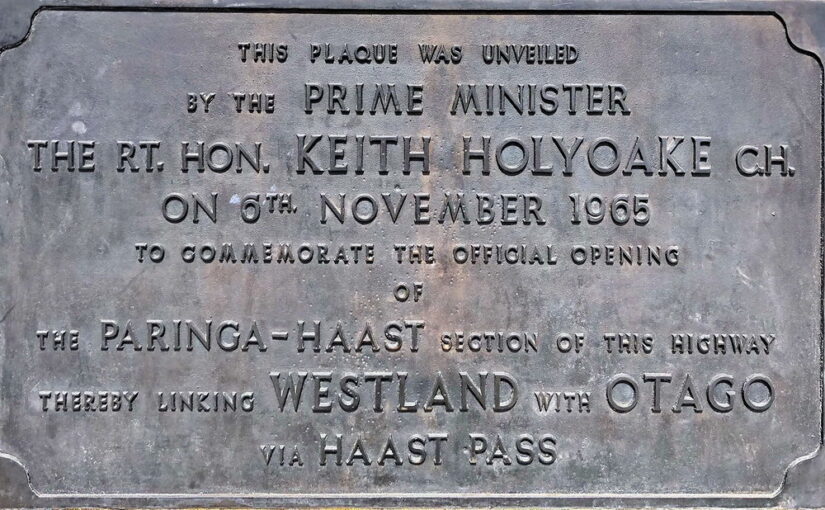
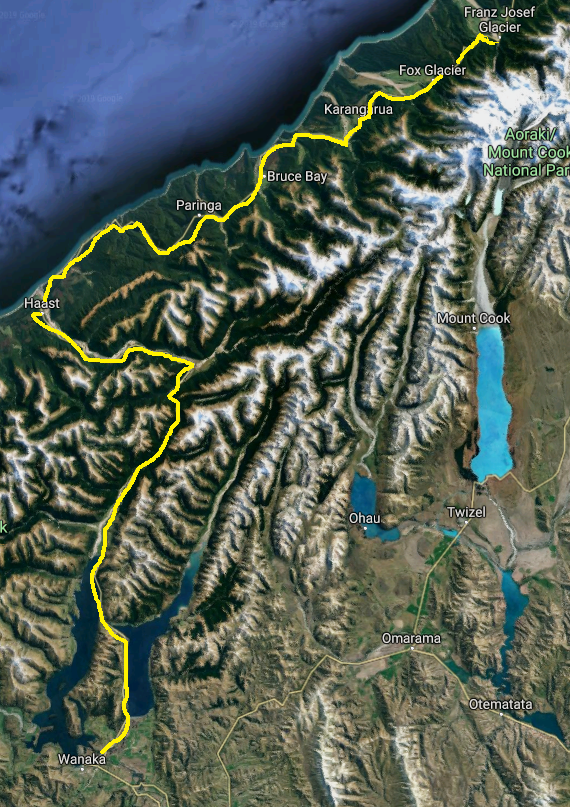
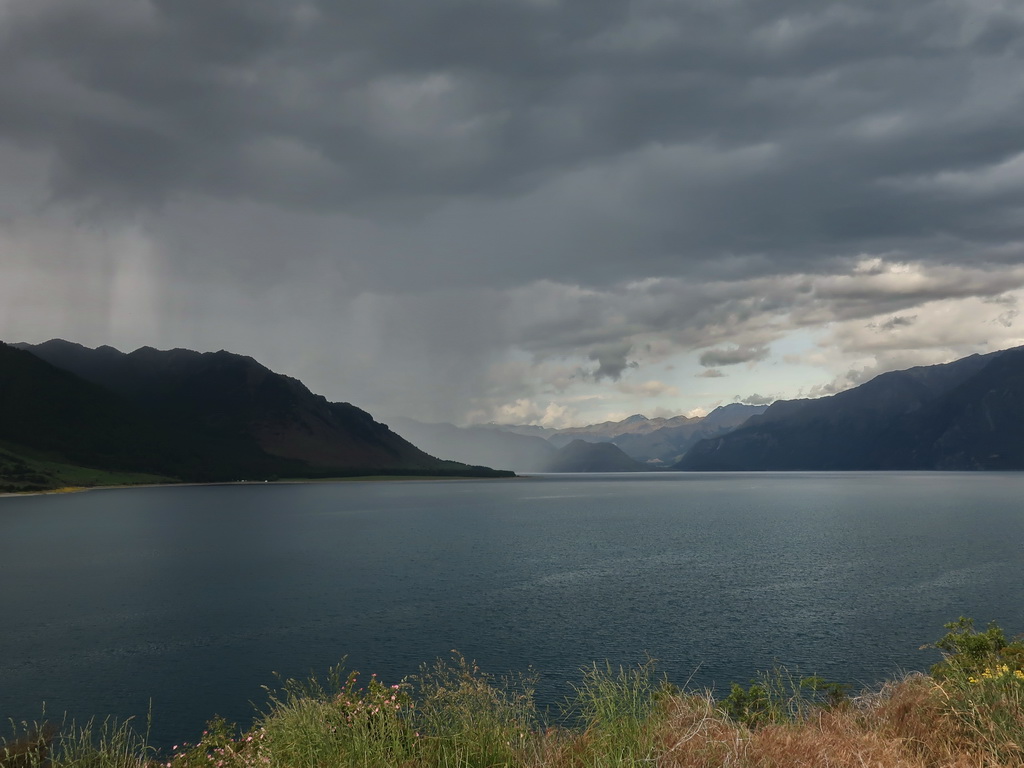
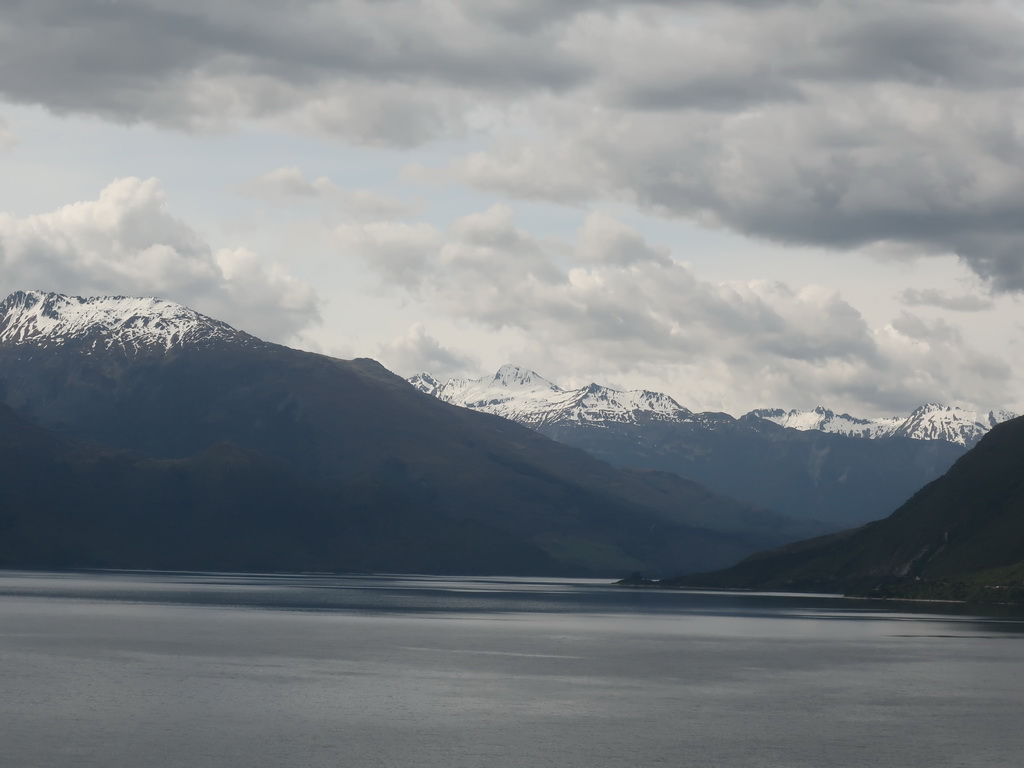
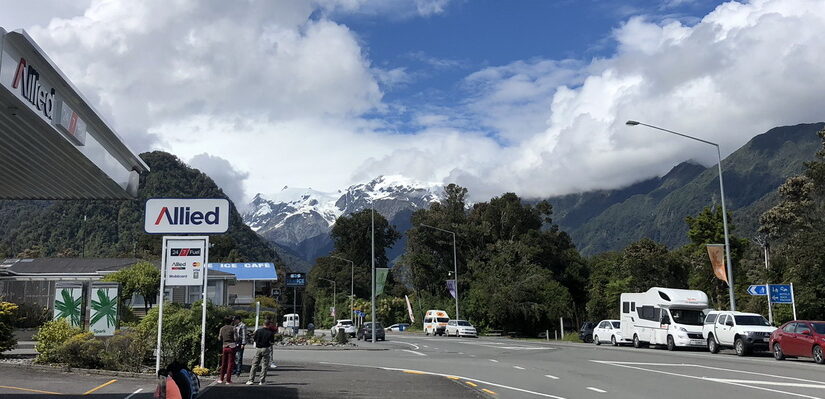
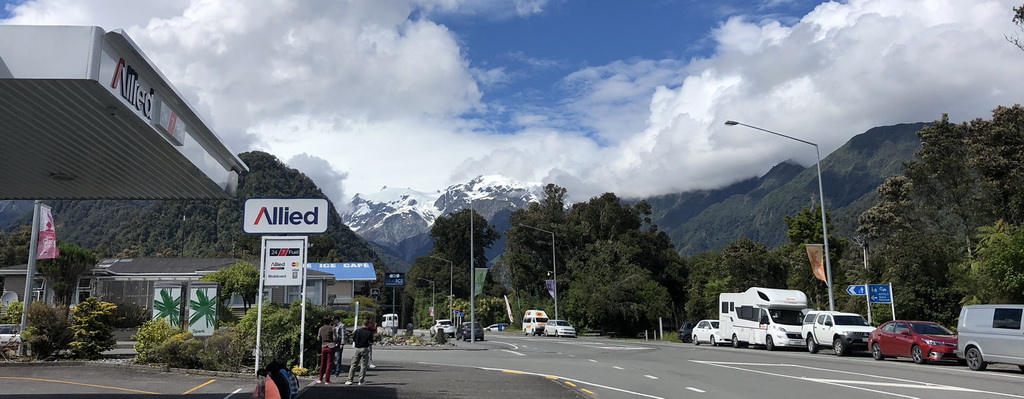
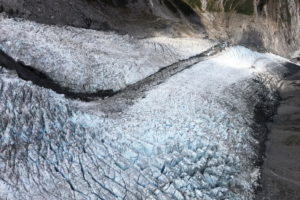
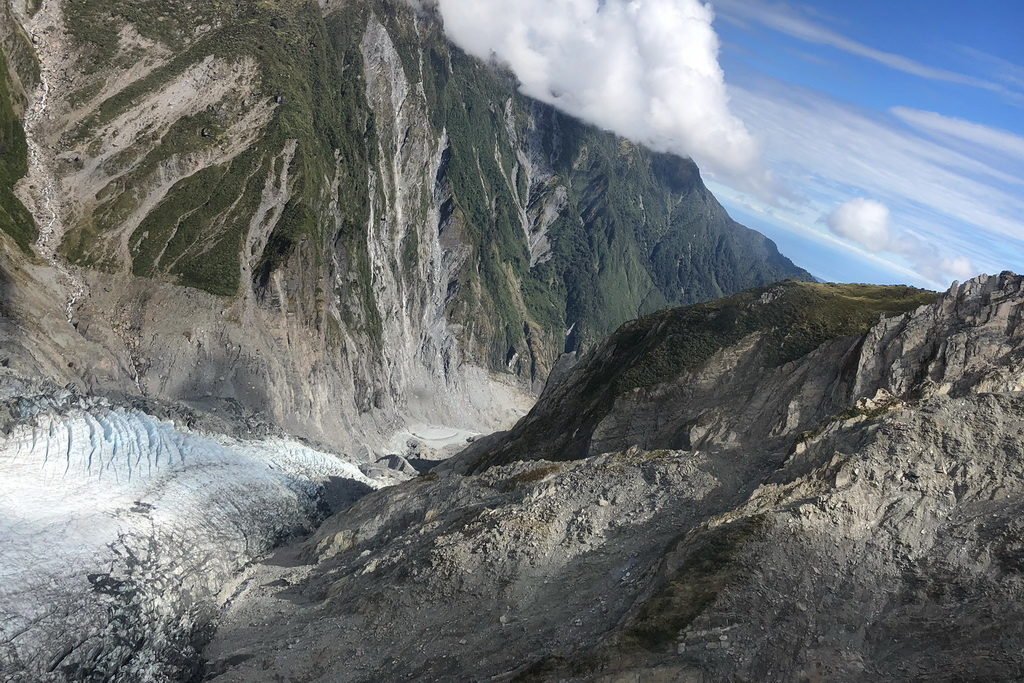
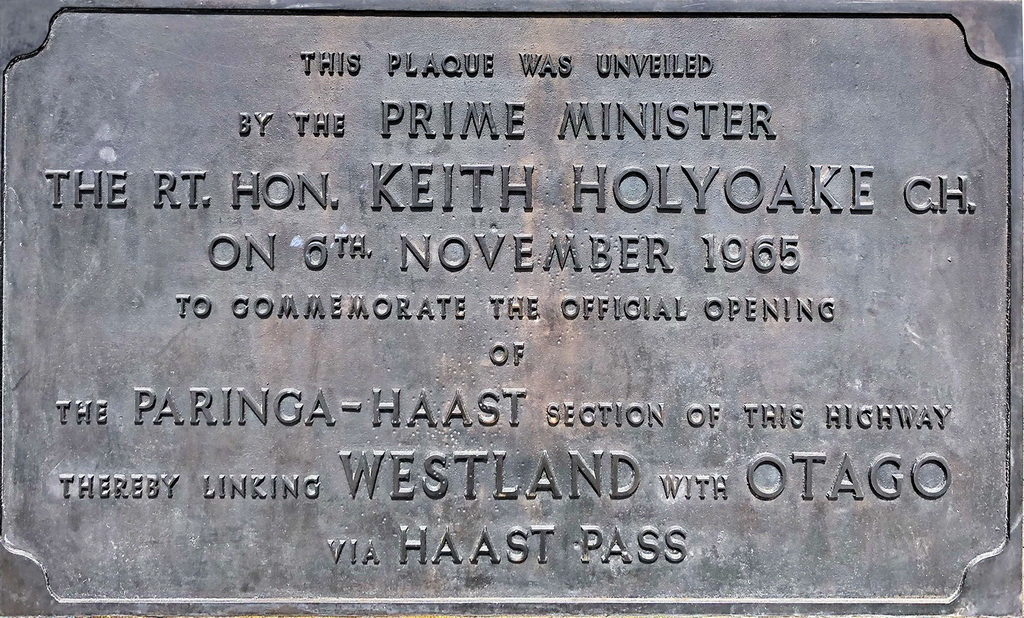 The last day of November found us leaving Franz Josef for Wanaka. This is a beautiful trip, leaving the lush landscape at the base of the Franz Josef Glacier and heading along the coast until turning inland at Haast. As we headed south, out of the town, we had one last glimpse of the immense glacier towering over the town.
  Before that, you had to drive north and across Arthur’s Pass to get from the coast to Wanaka. This highway cut the drive from over 1,000 kilometers to less than 150!
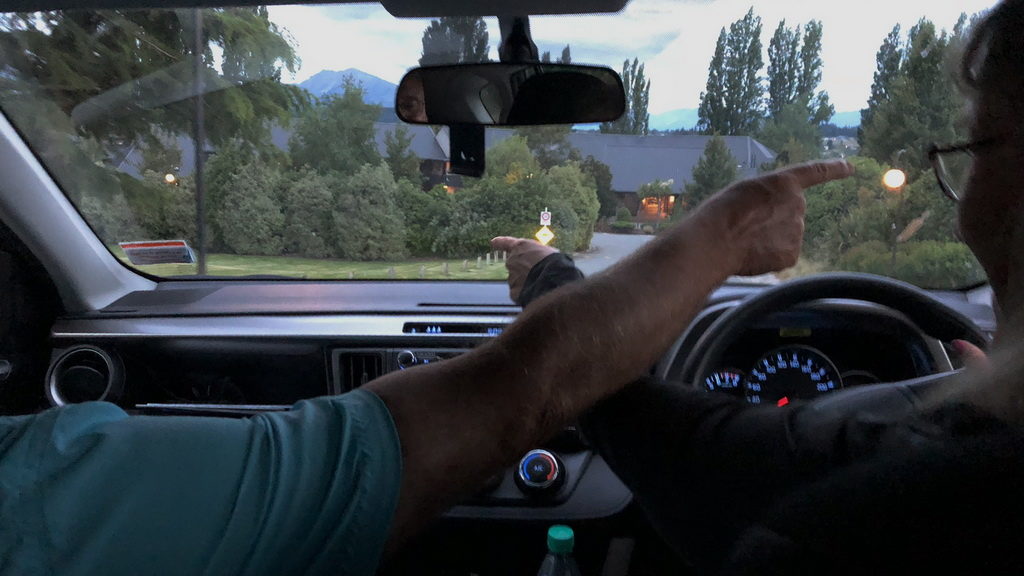 We had dinner in a local place on Cron Street – Alice May’s. Then, since it was still early, we took a short walk around the town to get our bearings for the next morning. With Julie driving and John navigating, we headed back to the Westwood Lodge. I should mention that there was a bit of confusion on the return trip to our lodging. The ‘kids in the front seat’ couldn’t agree on the best place to park, or even the best route into the parking lot. Fortunately, Carol and I figured it out from the back seat. Kids!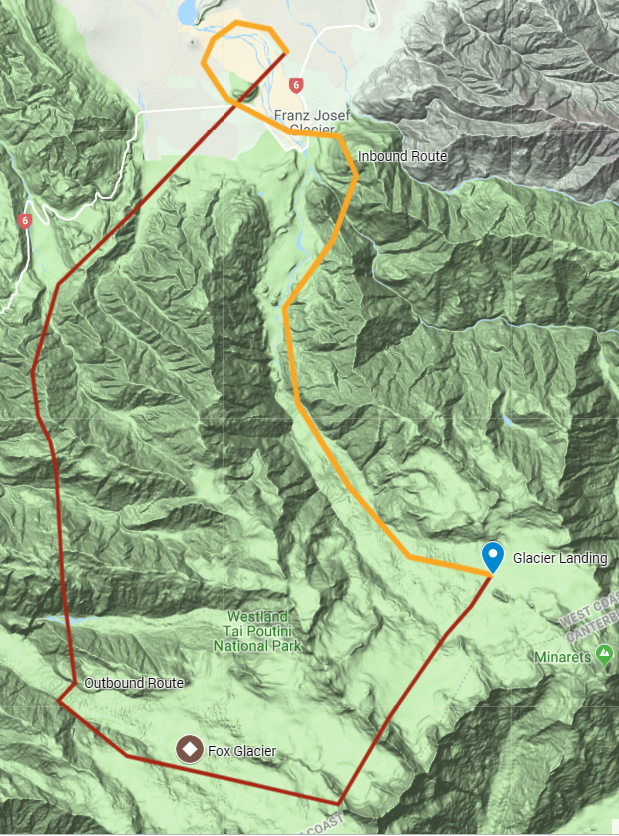
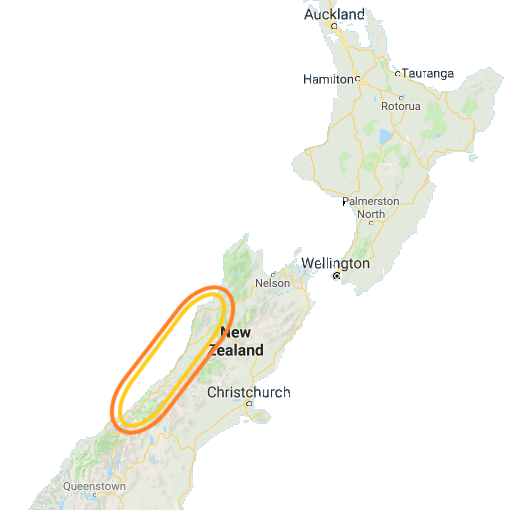
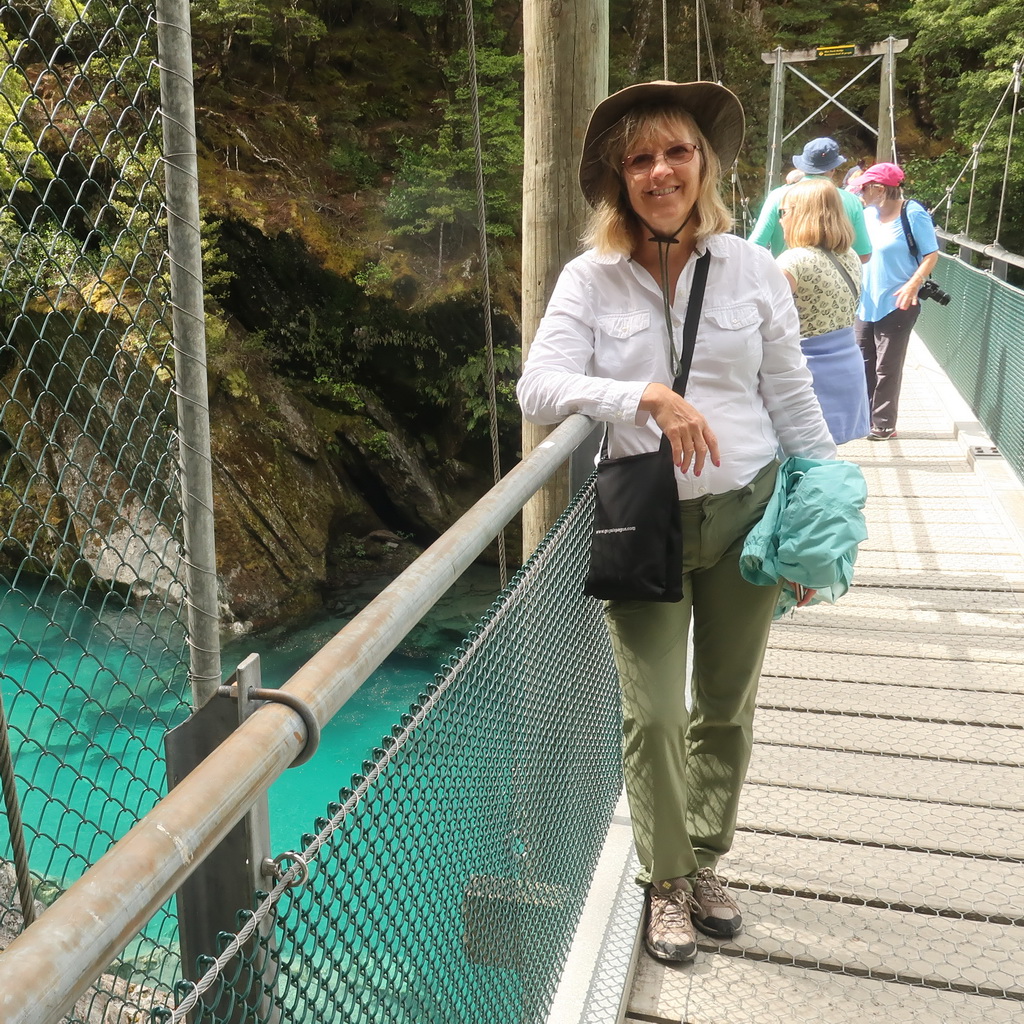
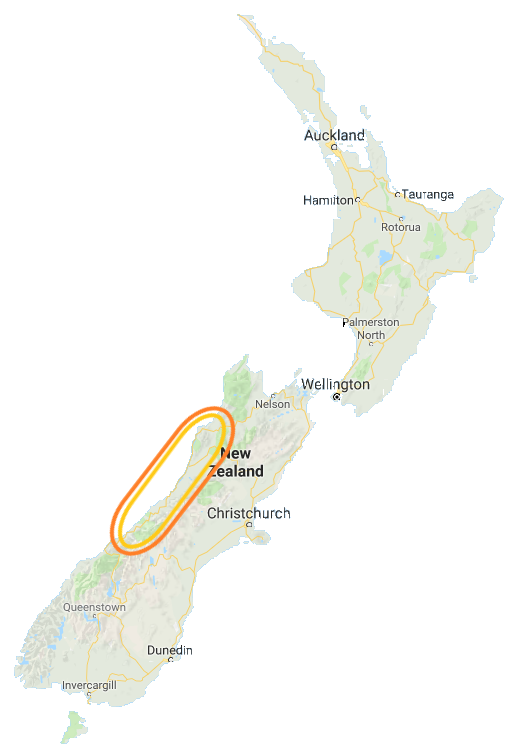 We left Nelson and headed south for Hwy 6 along the Buller River. The river, and the highway, run generally west through the Buller River Gorge. Originally a gold rush town, Murchison was almost completely destroyed by a huge earthquake in 1929, and we were going to explore the heart of that earthquake. We first stopped at the Buller River Gorge Swing-bridge.
 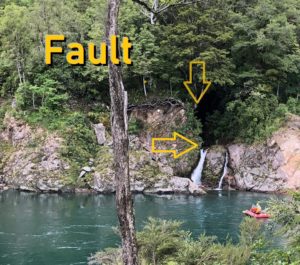 On the other side we explored some old buildings and walked for quite a distance through the crevice left by the
 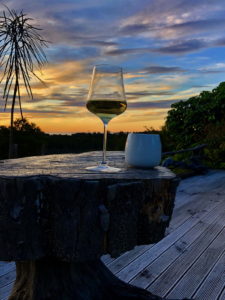 We spent our first night on the South Island’s west coast at the out of the way
 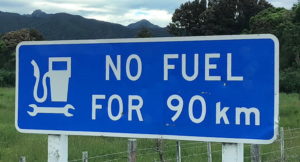 Since we had seen a sign that it was 90 km to the next gas station I was up early the next day and headed back to Westport (which we had bypassed the previous day) for gas. The largest city on the west coast, Westport tops out with a population of about 5,000. There were two gas stations in town! I fueled up and headed back to Birds Ferry for breakfast. Our first stop for the day was one of André’s recommendation – Truman Track.
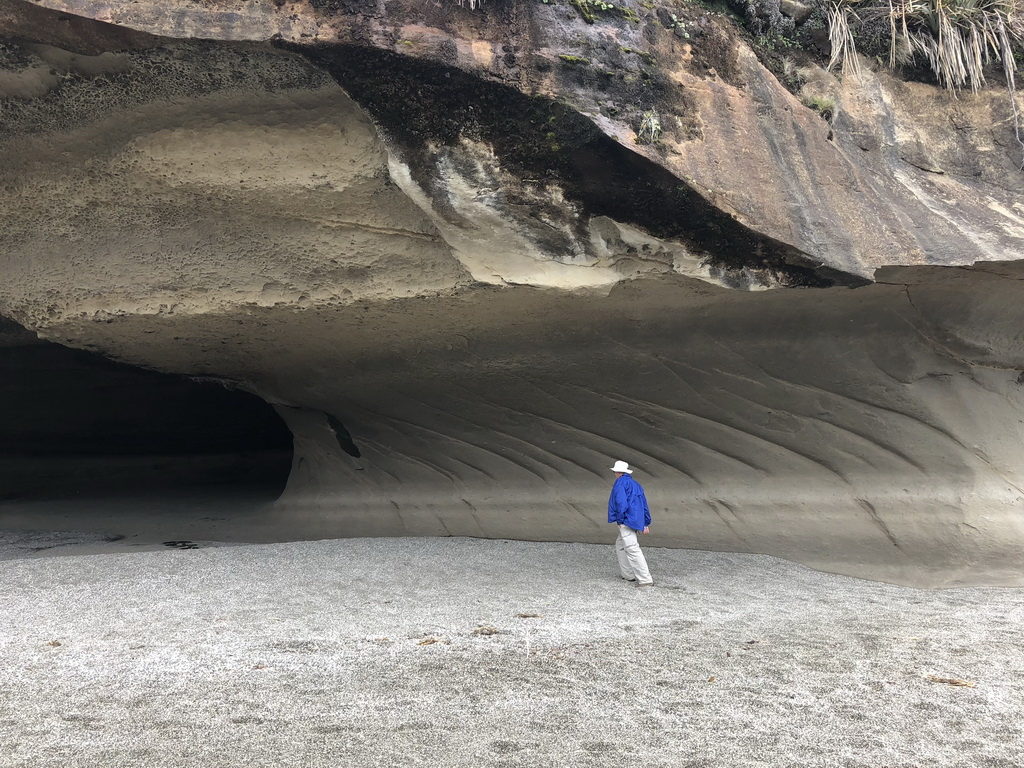 Truman Track looks uninspiring from the road – nothing but a path heading into the woods. The walk takes you through the small forest of native trees that opens into a field of flax bushes. We heard more birds than we saw. The track “officially ends” at a lookout point where we had an expansive view of the Tasman Sea and Truman Beach. We continued on to the right, down to Truman Beach via a small staircase.
 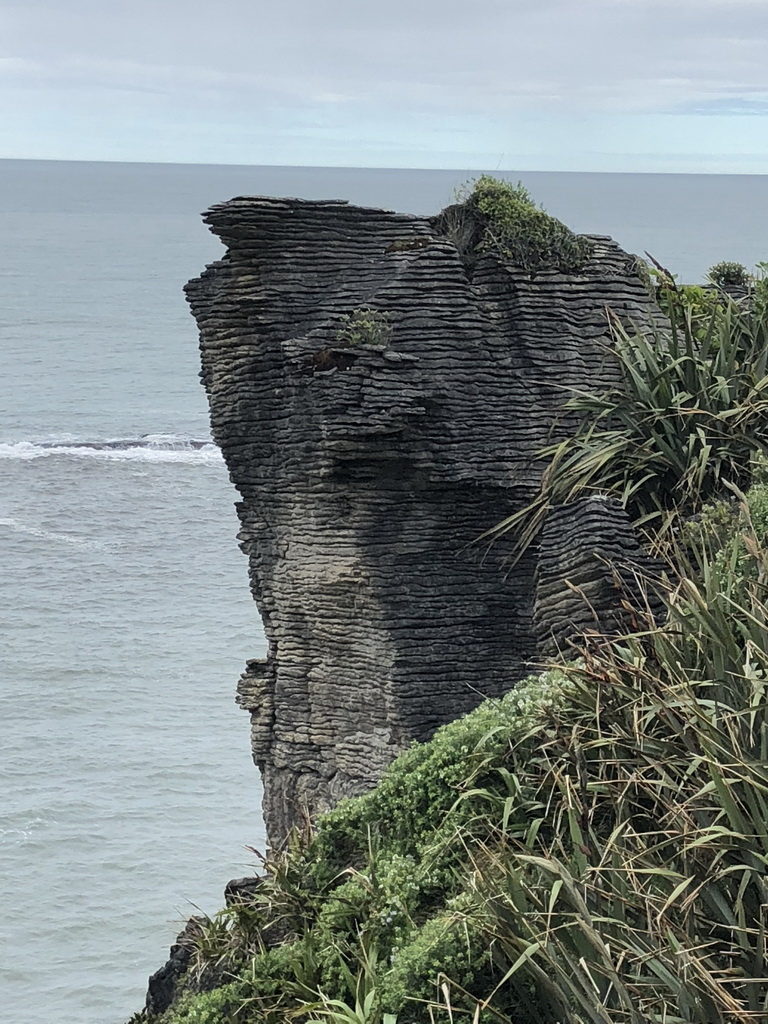 Pancake Rock is just a few miles down the road, but sharply contrasts with Truman Track. You can read about the geology of how these formations developed at the New Zealand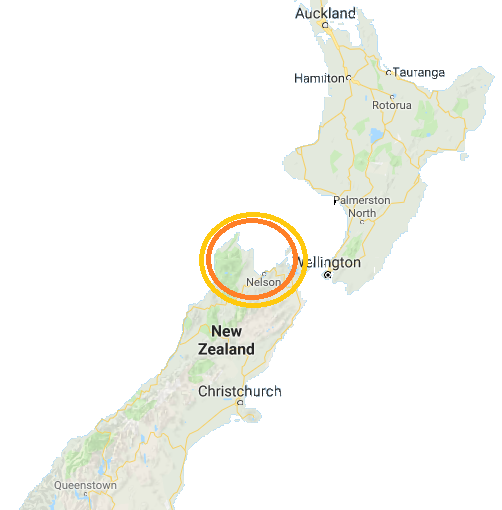
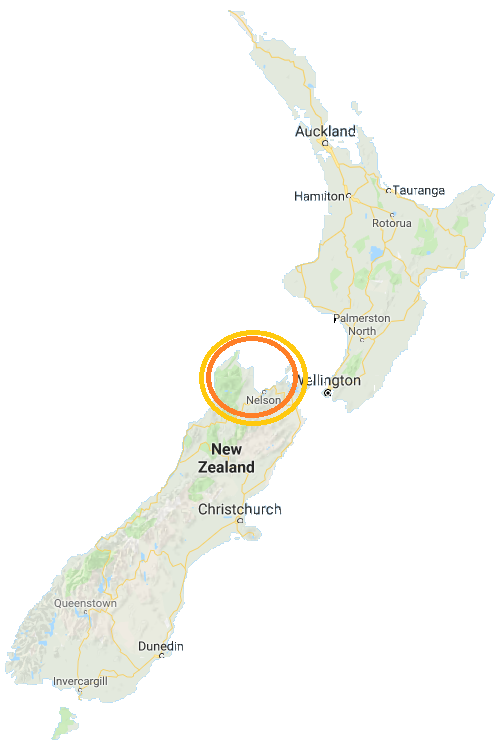 The South island of New Zealand has a lot to offer. We struggled deciding what to see in the two weeks we allocated to explore this place. There are towering mountains that surround peaceful sounds in the south and hug the rugged western coastline. Those were our targets – we’d start in the north and head west to explore the coast and then inland to explore the mountains and the natural beauty of the fjords in the southwest.
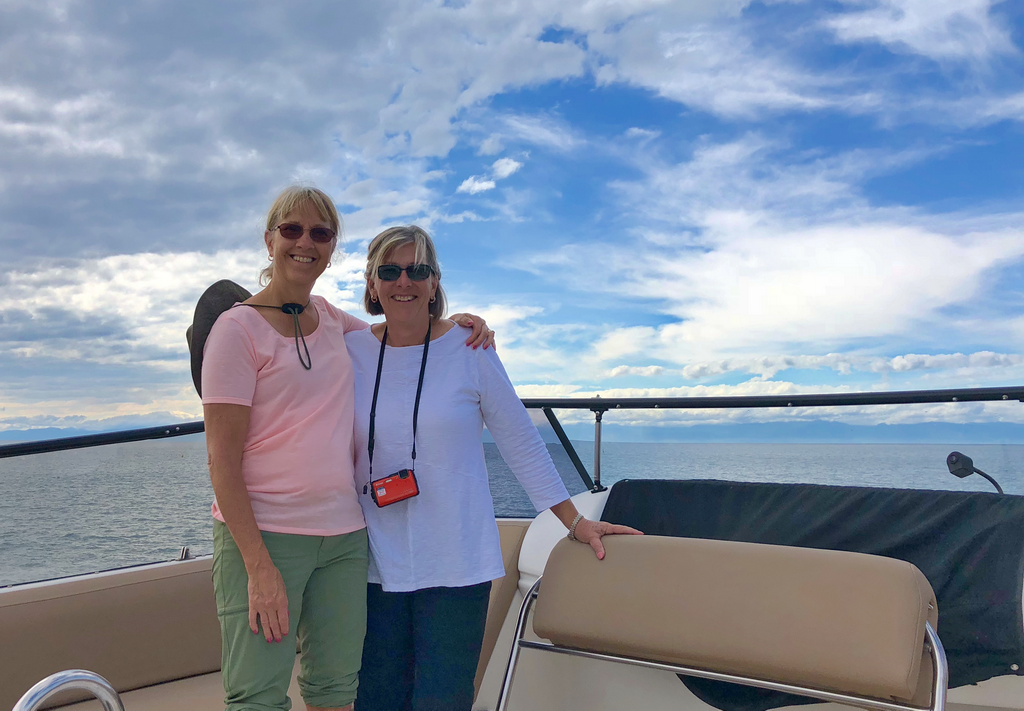 We saw seals, birds, dolphins and beautiful islands. Split Apple Rock was one of the first and most interesting sites. The crew, Captain Rob and his son, Angus, were patient and helpful at getting us in the best position for photos throughout the trip. With only six passengers, we had nearly unlimited flexibility in going where we wanted and staying as long as we wanted. We headed up the coast, stopping briefly off Adele Island, a bird sanctuary before continuing on. Along the way we relaxed and watched the seals in the water. Before breaking for lunch, Julie and I took our sea kayak and paddled into Bark Bay with John and Carol Brewer. It was a nice spot, so Julie and I hauled the kayak up onto a beach and hiked around the area for a bit before heading back for lunch on the boat.
 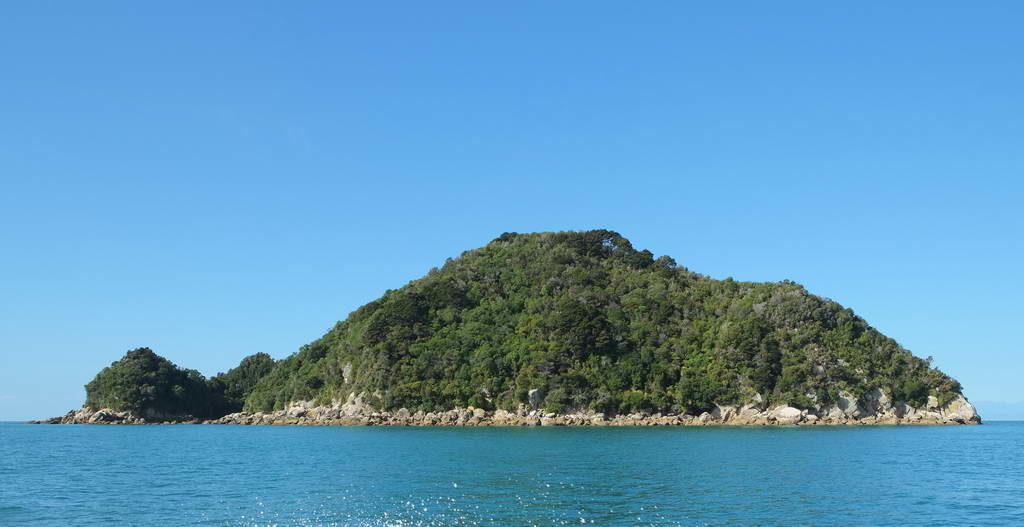 Along the way back we took the opportunity to walk through one of the most diverse coastal bush tracks on the Pitt Head Nature Loop. The hike was fun, but the views were amazing!
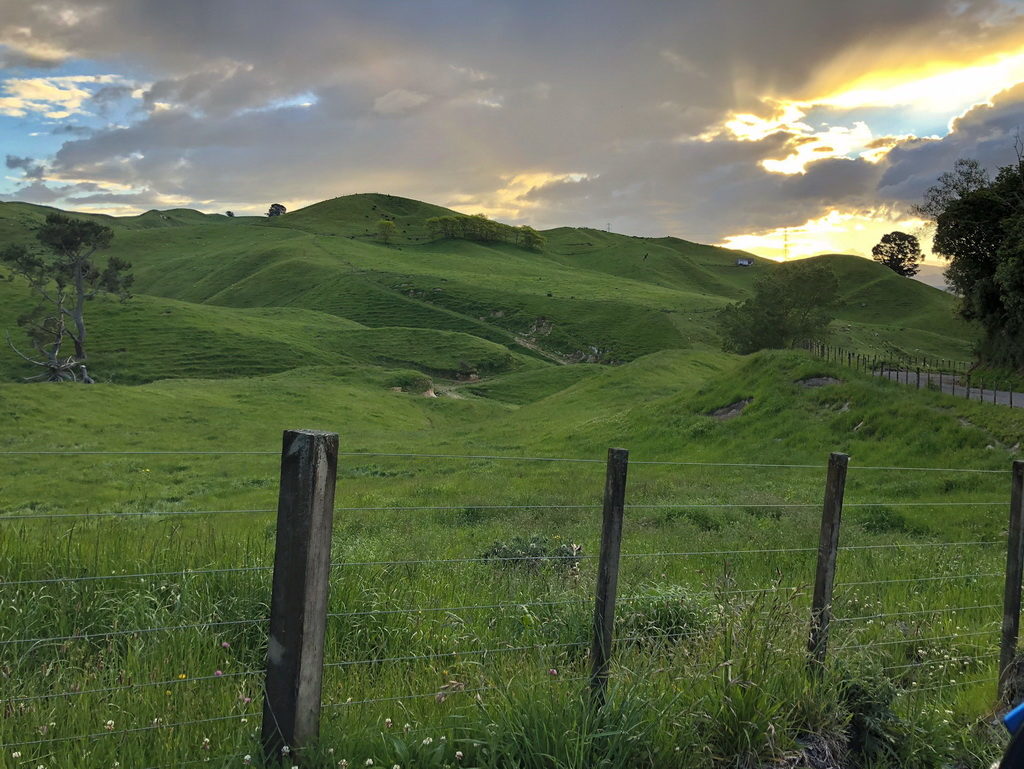 We couldn’t find any easy alternate route, but the highway person claimed there was an ‘easy bypass’ that was ‘just down the road’. With that, we were off. Before we knew it, we were traveling across increasingly less improved roads, then gravel roads and then dirt roads. When the dirt roads started getting dicey we also realized that we hadn’t seen any other cars or people for some time… and it was starting to get dark. Even the cows and sheep looked at us in interest as if they were saying, “What the heck are those people doing way the heck out here?”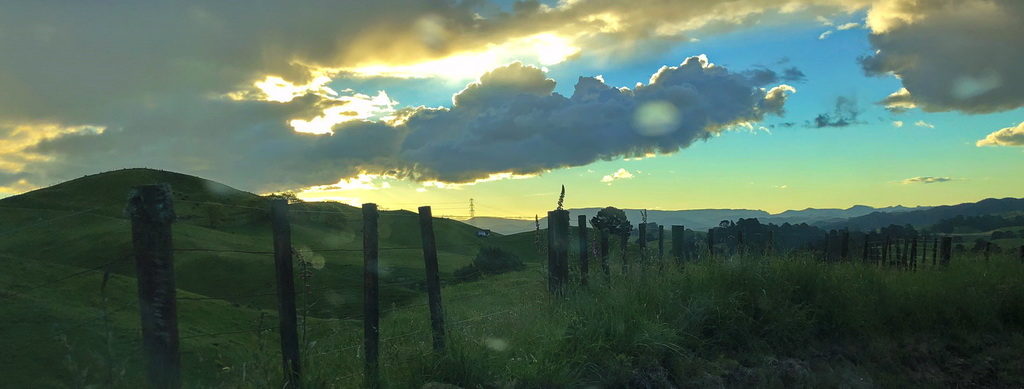
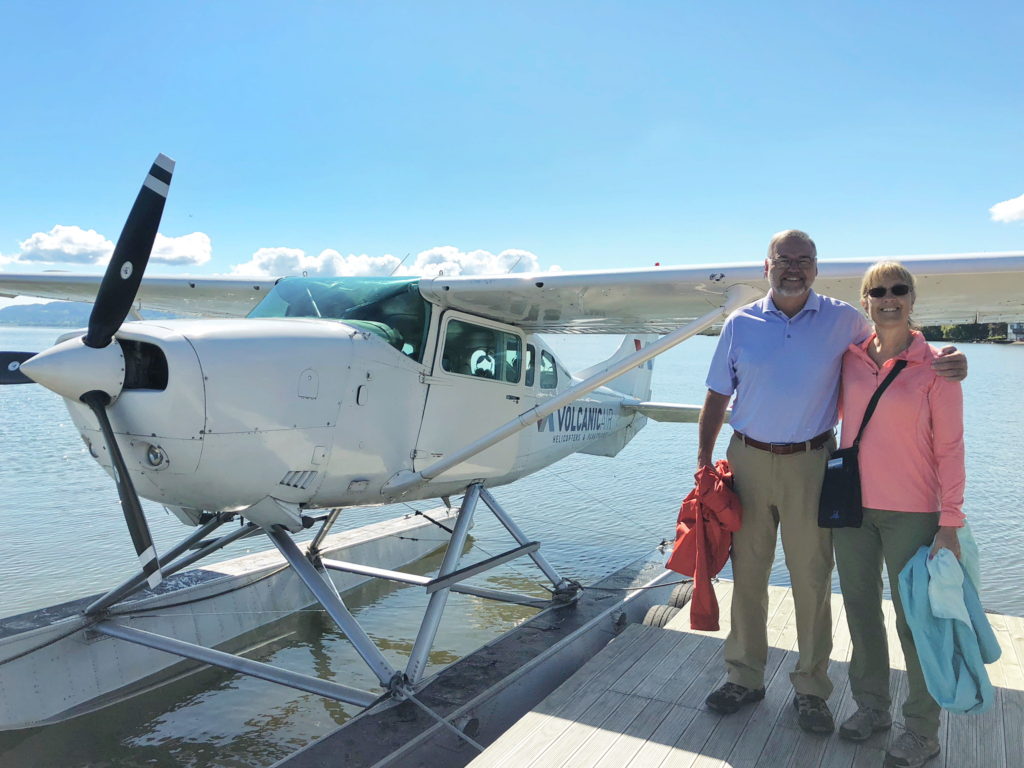 Two things that stood out from our time in Rotorua were a visit to a cultural center and a ride in a float plane over the volcanic region around Rotorua. From the plane, we could clearly see a rift that went across an old volcano, through a lake and a river. We were also able to plainly see other impacts of recent seismic events. It was an enlightening and beautiful flight, and taking off and landing on a lake made the flight all that more interesting.